

What a Bad Room Teaches That a Good One Cannot
A friendly bar show gives you applause and no information. What a paying club audience tells you about your act, why silence reads more clearly than laughter, and what to do with both.
A friendly bar show gives you applause and no information. What a paying club audience tells you about your act, why silence reads more clearly than laughter, and what to do with both.

41 likes on the flyer, 38 from comics, 9 paid at the door. Why show promotion stays trapped inside the scene, and how to sell the night instead of the lineup.
Eleven posts and nine tickets sold is a positioning problem, not a reach problem. How to price, list and fill an independent comedy show you produced, in four jobs.
Bookers ignore paragraphs. The three lines that actually get you a guest spot, the clip that decides it, and everything to leave out of the email you send a producer.

Stage time makes you good. It has never made anyone known. The open mic math nobody wants to do, and the second job every working comic now has.

The host already said your name, so your first line is doing nothing. What a real opener establishes in fifteen seconds, and the two times your name still belongs up front.
Bookers decide in five minutes, usually less. How to build, pressure-test, and package the short set that gets you spots, using Houston area 38 weekly open mics.
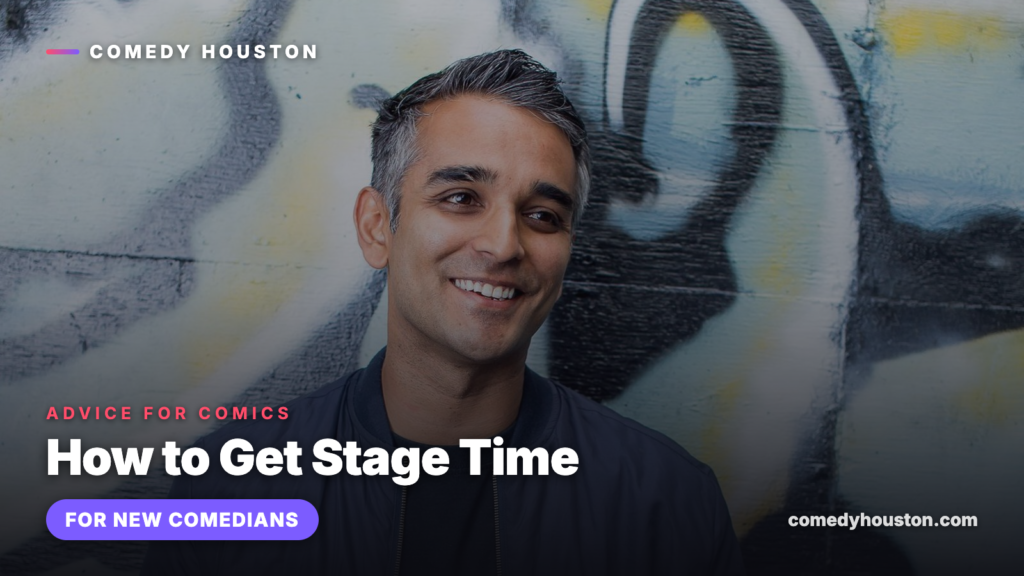
How to get stage time as a new comedian: the open mic circuit, earning guest spots, producing your own show, hosting, and the bringer-show trap to avoid.
How to get booked at a comedy club, from the people who book them: what the Comedy Cellar and NY Improv bookers look for, the email that works, bringer shows, and pay.

We list every comedy show in Houston, so we see who fills the big rooms. None of them did it with festival laurels. What replaced the credit system, and what to do about it.