
As an Amazon Associate I earn from qualifying purchases. This post contains affiliate links (paid links). If you buy through them, we earn a small commission at no extra cost to you. It helps keep our show listings free.
The short answer: if you want to skip the reading, buy the JBL EON ONE Compact. Two XLR inputs, a real mixer, a 12 hour battery, and it fits in a backpack. On a tight budget, the Alto TS408 does the job.
Quick Picks: Best Speakers for a Comedy Open Mic: 6 Picks at 3 Budgets (September 2026)
| Best for | Speaker | Why | Price |
|---|---|---|---|
| Cheapest that works | Alto TS408 | Built-in 3 channel mixer, two XLR inputs, Bluetooth | Check price on Amazon |
| Budget with more headroom | Alto TS410 | Same mixer in a louder 10 inch cabinet | Check price on Amazon |
| Best for most open mics | JBL EON ONE Compact | 4 channel mixer, 12 hour battery, backpack size | Check price on Amazon |
| Lightest one-box PA | Bose S1 Pro+ | 14 pounds, 11 hour battery, four positions | Check price on Amazon |
| Pro build, all-night battery | Electro-Voice Everse 8 | Real bar volume for 12 or more hours | Check price on Amazon |
| Weekly mic workhorse | Yamaha StagePas 400BT | Two speakers plus a detachable mixer | Check price on Amazon |
Prices checked on Amazon September 8, 2026. They change often, so the links always show the current price. Paid links.
The best speaker for most comedy open mics is the JBL EON ONE Compact, around $549: a 4 channel mixer, Bluetooth for your walk-on music, a 12 hour battery, and 17 pounds to carry. On a tight budget, the Alto TS408 does the same job for around $300. For a serious weekly mic in a bigger room, the Yamaha StagePas 400BT is the one we ran our own mics on for years.
That is the short answer. The longer answer is about what an open mic actually asks of a speaker, because it is not the same thing a comedy show asks, and it is definitely not what a band asks. Get this one purchase right and every other part of hosting gets easier.
What an Open Mic Needs That a Regular Show Does Not
We covered general comedy sound in our guide to the best PA systems for comedy shows, and the full hosting checklist lives in our comedy open mic starter kit. This post exists because open mics have three requirements those guides only touch.
Two microphone channels, minimum. A booked show is one comic and one mic. An open mic is 20 comics, a host doing handoffs all night, the occasional two-person act, and a guest who shows up with their own mic. With a second channel, the host can hold a live mic while the next comic takes the stand, and the show never stops moving. With one channel, every transition is dead air while a mic gets passed like a baton. Every speaker below has at least two mic inputs.
Music from your phone, wirelessly. Energy is the real product of an open mic. The difference between a room that feels like a show and a room that feels like a support group is mostly walk-on music: something playing as people arrive, a sting as each comic walks up, music back up the second they say goodnight. That means Bluetooth from the phone in your pocket, not a cable you have to run and trip over. Every pick below streams from a phone.
Setup in the time it takes to drag two tables. Bars do not give you a load-in window. You get whatever time exists between “the dinner crowd left” and “your listed start time,” and a mic that starts late bleeds comics. Everything here goes from trunk to working in under ten minutes.
The Budget Pair: Alto TS408 and TS410
Alto TS408
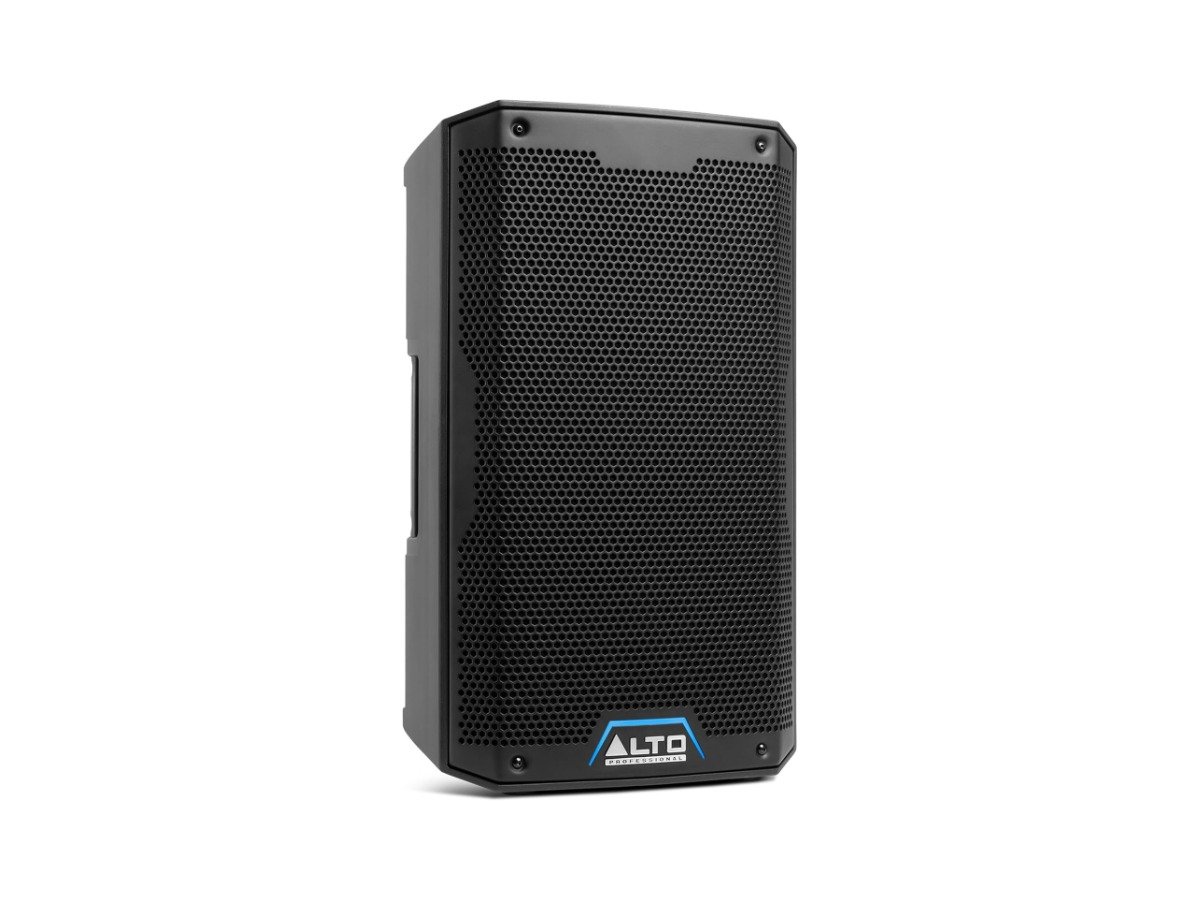
The Alto TS408 (around $300) is the cheapest speaker we would actually run a mic on, and the reason is the mixer: a built-in 3 channel section with two XLR combo inputs plus Bluetooth streaming. That is the whole open mic formula in one box at the price of a bar tab: host mic in channel one, stage mic in channel two, phone playing walk-on music over Bluetooth. An 8 inch woofer is plenty for voice in a room of 40 to 60 people.
Alto TS410
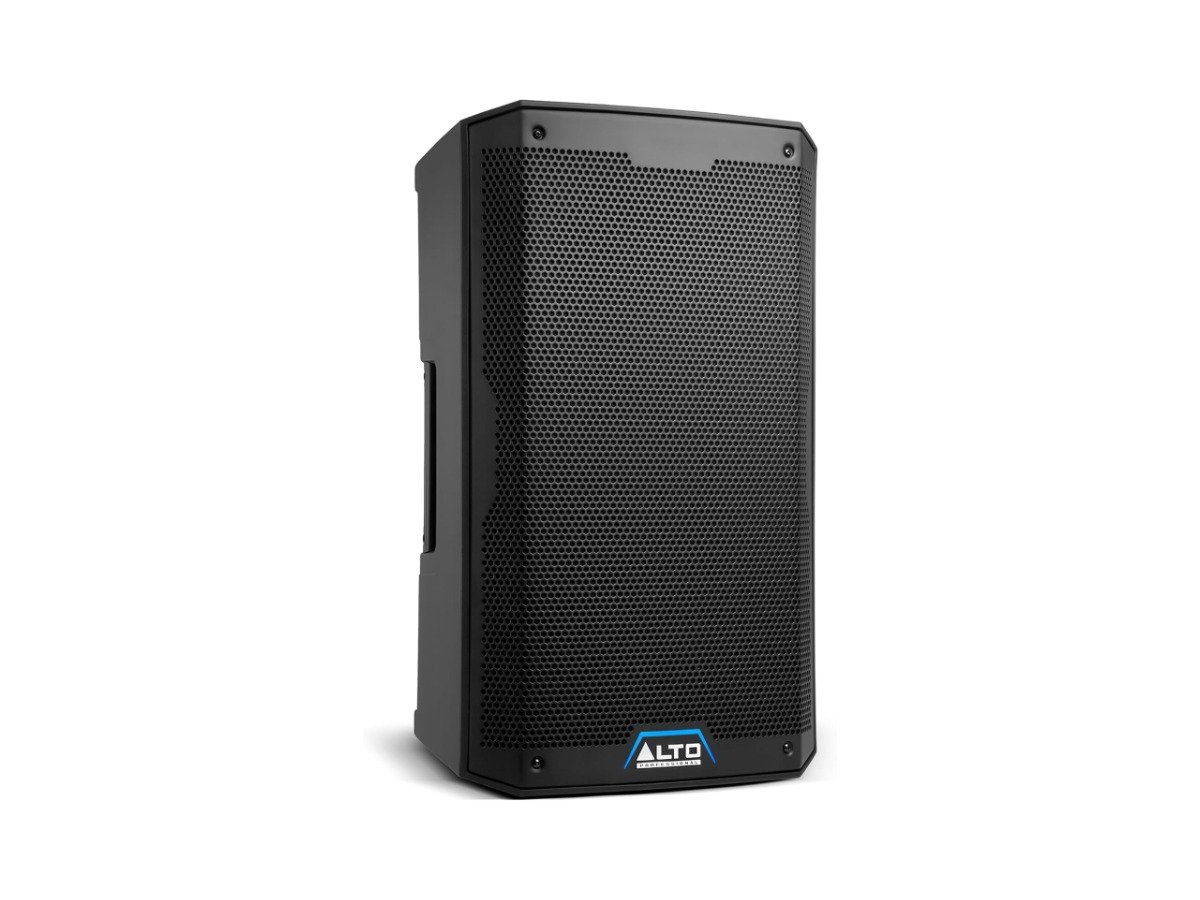
The Alto TS410 (around $349) is the same mixer and the same Bluetooth in a 10 inch cabinet with more low end and more headroom. The extra $50 buys you a louder ceiling, which matters in a bar that keeps its TVs on. Pick between the two by room: the TS408 for a quiet side room, the TS410 for a main bar area that fights back. Both need wall power and a speaker stand, so budget for that.
The Middle: JBL EON ONE Compact and Bose S1 Pro+
JBL EON ONE Compact: the best speaker for most open mics
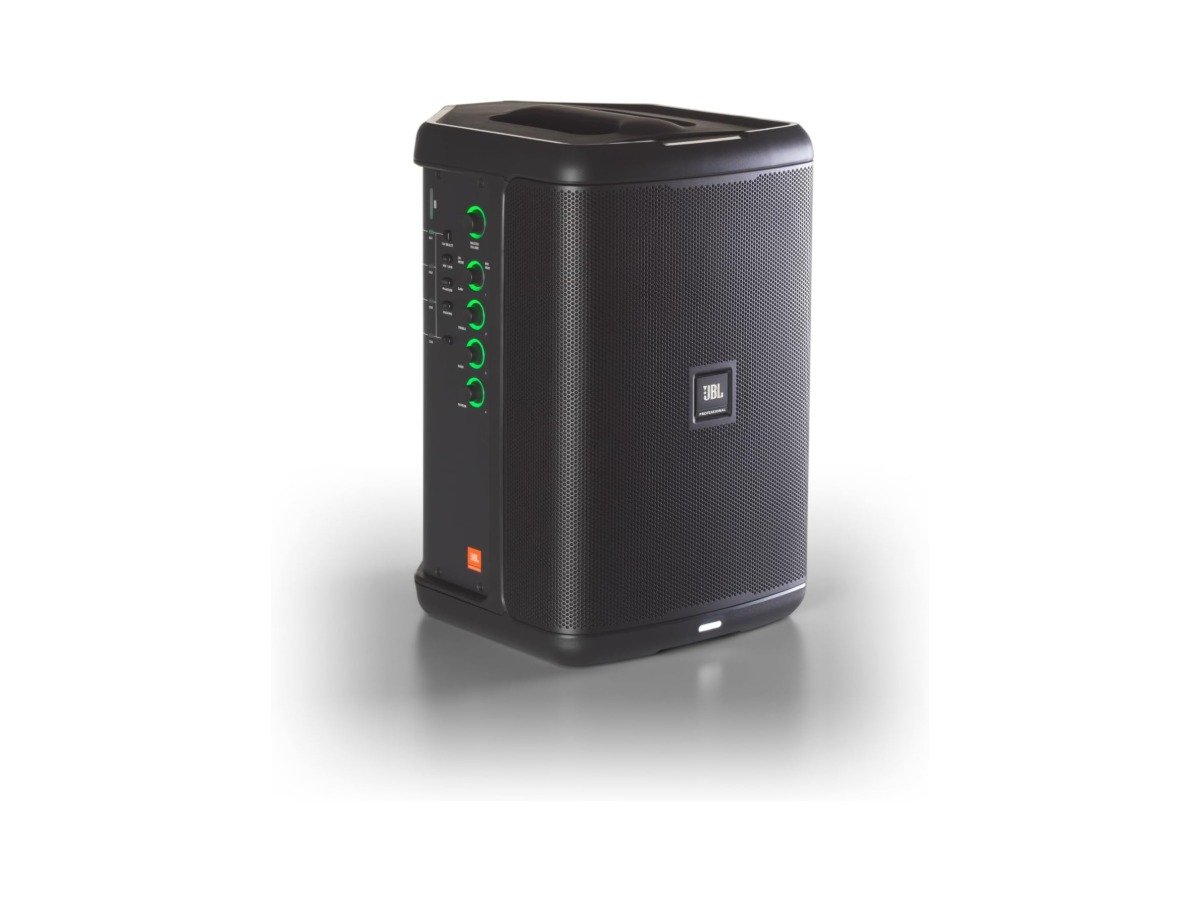
The JBL EON ONE Compact (around $549) is our default recommendation because it solves problems you do not know you have yet. It has a real 4 channel mixer with two XLR combo inputs, so two mics and music is easy. It runs on a 12 hour swappable battery, so the sketchy outlet situation at the bar stops being your problem. It weighs 17 pounds and needs no stand. And it has one-touch ducking, which automatically lowers your Bluetooth music the moment someone speaks into a mic, so the host walks up, talks, and the music gets out of the way by itself. For a mic run by one person who is also hosting, that is the feature that matters most.
Bose S1 Pro+
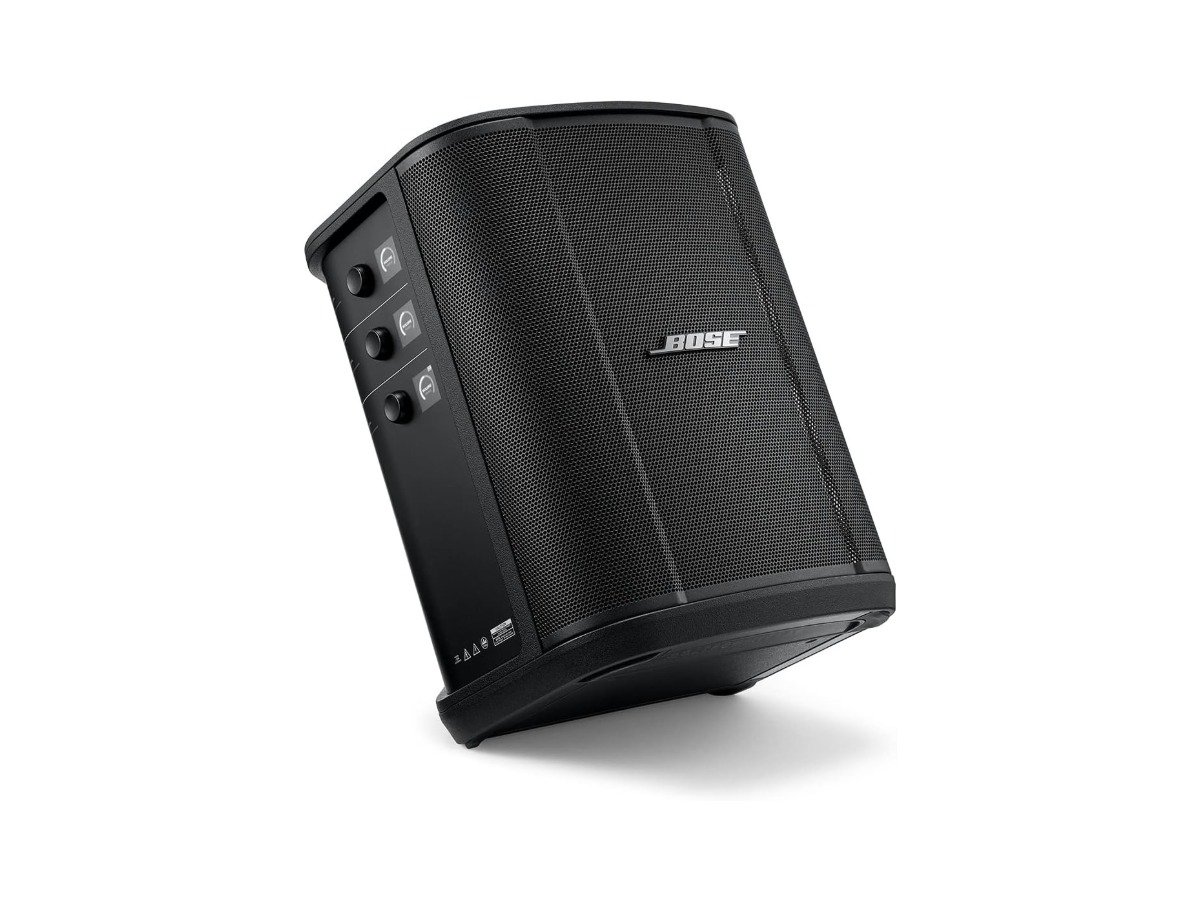
The Bose S1 Pro+ (around $699) is the other one-box answer: a 3 channel mixer with two mic and instrument channels plus a dedicated music channel, an 11 hour battery, and the lightest carry here at 14.4 pounds. It also sits in four positions, including a tilt-back that aims the sound up at a standing crowd from the floor, which quietly removes the speaker stand from your load-out. The sound is a touch more polished than the JBL, the mixer one channel smaller. If you value carry weight and sound over the JBL’s ducking, this is the pick.
The High End: EV Everse 8 and Yamaha StagePas 400BT
Electro-Voice Everse 8
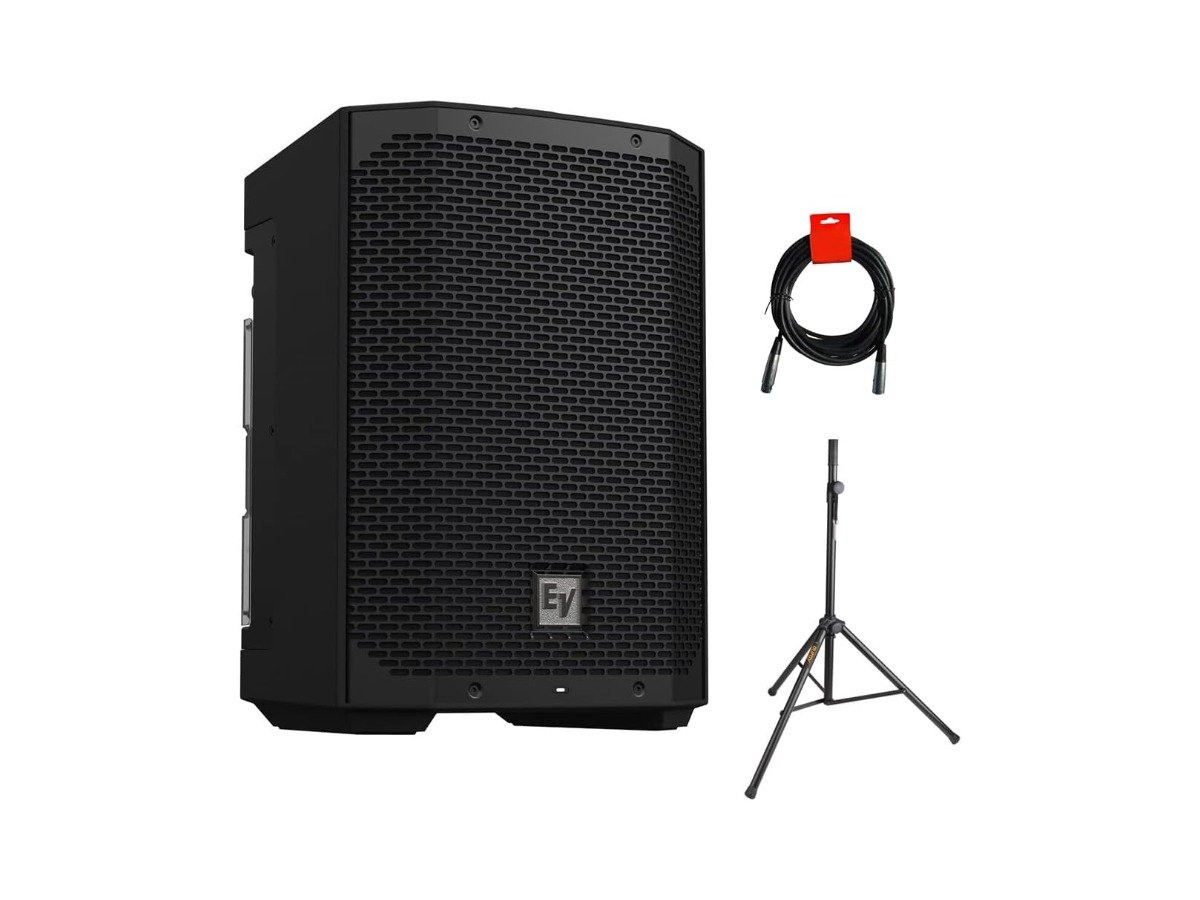
The EV Everse 8 (around $800) is what the battery speaker category looks like when a pro audio company stops compromising: two XLR combo inputs plus an aux input and Bluetooth, 12 or more hours of battery at real bar volume, and 16.8 pounds. The reason to pay the premium over the JBL is output and build. This is the battery speaker for the mic that has outgrown its room, the outdoor patio show, and the producer who wants one speaker that also covers their booked shows. It is the best sounding single box on this page.
Yamaha StagePas 400BT: the weekly mic workhorse
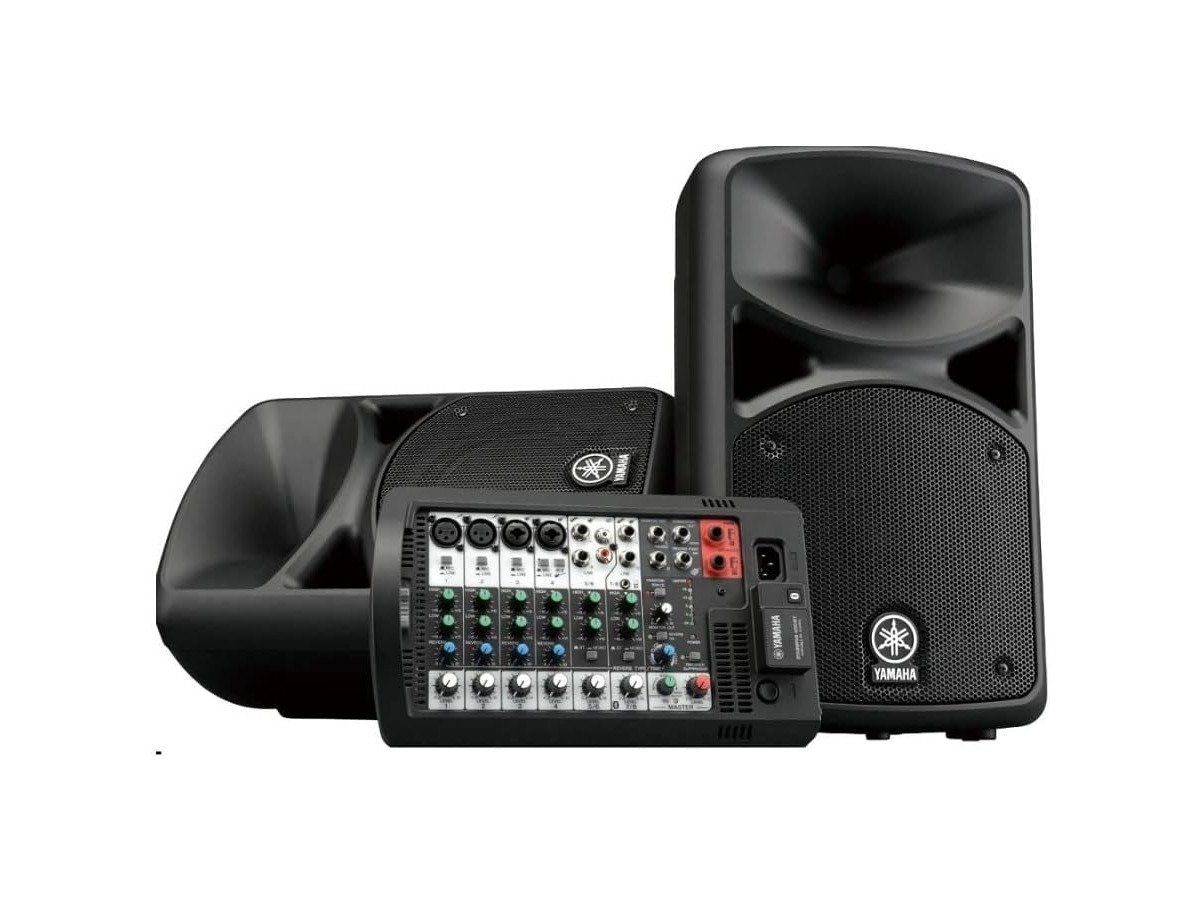
The Yamaha StagePas 400BT (around $870) is a different kind of answer: a complete PA in a package that carries like luggage. You get two 8 inch speakers, so the room is covered evenly instead of blasted from one corner, and a detachable 8 channel mixer with 4 mic inputs, Bluetooth, built-in reverb, and a one-button feedback suppressor. Four mic inputs sounds like overkill until the night it is not: host mic, stage mic, a spare that stays plugged in, and one left over for the podcast recorder or a guest act.
This is also the system this site’s editor ran his own open mics on, so the recommendation comes from years of Tuesdays, not a spec sheet. The honest report: it sets up in minutes, the feedback suppressor earns its button, and the whole rig at about 40 pounds splits into pieces one person carries in one trip. If your mic is a fixture with a real weekly crowd, this is the buy-once answer. If you want the same idea with 10 inch speakers and more power for a bigger room, the step up is the StagePas 600BT (around $1,069).
What You Can Skip
Three things open mic hosts buy and regret. Party speakers with light rings are built for playlists, not live microphones; most have one mic input, no real mixer, and feedback problems on speech. Wireless microphones die mid-show and walk off in comics’ backpacks; wired mics cost less and cannot do either, and our stand-up microphone guide has the two worth owning. And subwoofers move air a comedy voice does not have; spend that money on a spare mic and better cables instead.
Frequently Asked Questions
Do I need two speakers for a comedy open mic?
One good speaker covers most bar rooms. Two earn their carry in wide or L-shaped rooms, where a single corner speaker leaves half the crowd listening from off-axis. That is the case for the StagePas systems; everything else here is a deliberate one-box answer.
How many watts does an open mic speaker need?
Watt ratings are marketing more than physics, which is why a 2000 watt Alto costs $300. Every speaker on this page is loud enough for a 40 to 100 person bar. Placement decides more than power: in front of the mic, at ear height, aimed at the crowd.
Can I just use the bar’s existing sound system?
No. House systems are built for background music: they distort on speech, the ceiling speakers point at nobody, and the volume knob lives behind the bar. Bringing your own speaker is what makes the mic yours.
Do I need a separate mixer?
Not for the show. Every pick here has a built-in mixer with at least two mic channels, which covers hosting, handoffs, and music. A standalone mixer only enters the picture when you start recording multiple mics for a podcast, which our comedy podcast mic guide covers.
Pick by Your Room, Then Protect the Energy
Choose with your actual Tuesday in mind. Quiet side room and a tight budget: Alto TS408. Loud main bar: TS410. One person running everything with uncertain outlets: JBL EON ONE Compact, or the Bose S1 Pro+ if carry weight decides it. A weekly mic you intend to run for years: the StagePas 400BT. Then order it, learn the knobs at home, and build the music ritual from night one, because the speaker is just the delivery system. The energy is the show. Our open mic hosting playbook covers the rest of the kit and the running order that keeps a room alive.