
In This Guide:
- Misery Loves Company
- The Craft Still Comes First
- You Refuse to Learn Any Other Skills to Support Your Art
- Your Ego Won’t Let You Take Advice
- Build Your Digital Presence Like It’s Your Second Job
- The Clipping and Content Workflow Nobody Teaches You
- They Refuse to Promote
- The Comedy Career Timeline Nobody Talks About
- Conclusion & Next Steps
- FAQ
I’ve done comedy for over 13 years, with ten of those dedicated to getting on stage at least 3 times a week. I’ve seen young comedians become stars in less than 12 months, and comics with 20 years under their belt never move past the open mic.
So I thought I’d write a blog post talking about something I know near and dear. And that’s on how to grow your comedy career. And while I’m still learning myself, there is a lot I’m happy to share that I’m confident will help anyone willing to put in the work.
Comedy is hard. The sad part is most make it harder than it needs to be.
If they just did a fraction of the things I’m going to talk about below, they’d likely be in a much happier place.
Who is this post for? If you’ve been doing comedy for 2 to 10 years, you’re hitting open mics regularly, maybe getting a few guest spots, but you can’t seem to break into paid bookings, headlining, or building any kind of real following then this is for you. This is the post I wish someone handed me at year three.
| THINGS COMICS FOCUS ON | THINGS THEY SHOULD FOCUS ON | THINGS THEY SHOULD WORRY ABOUT | THINGS THEY SHOULD ACCEPT TO LEARN |
|---|---|---|---|
| DRAMA | WRITING JOKES | SHADY BOOKERS | VIDEO EDITING |
| GOSSIP | FACEBOOK ADS | THEIR OWN EGO | VIDEO PRODUCTION |
| OPEN MIC CLIQUES | EVENTBRITE MARKETING | BRINGER SHOWS | DIGITAL MARKETING |
| NUMBER OF FOLLOWERS | TICKETMASTER MARKETING | SOBRIETY |
Misery Loves Company
“If comedians spent just 1% of the time writing jokes as they did gossiping or complaining…they’d have nothing to complain about. Because they’d already be making millions.”
Comedians should write jokes, not about each other.
However most comics see themselves putting in the grind at mics years after years, and can’t seem to catch a break. They don’t realize this is actually self defeating and they need to look at this like a career.
Fifteen Mistakes New Comedians Make
Comedy is a lot like day trading or the stock market. People think if I click a button I can make money….in the same vain they think all I need is to gel my hair, look good and walk up to a microphone. Millions of dollars and beautiful women, here we come right?
WRONG.
The things that look easiest are often the hardest. Just like the stock market, the 1% makes money from the 99% who are attracted to it.
In stand up comedy, while there occasionally can be naturals who break by pure raw talent (Eddie Murphy at 21 years old?), most will have to treat this like a career and learn a ton of things beyond just writing jokes.
Your job is to get folks into seats and put on a good evening. There is no comic without an audience.
That is first and foremost step 1. However, if you walk into any local bar or club in America, chances are you will see a singer who is prettier and has better vocals than 98% of pop stars making millions of dollars.
Did you ever wonder why that is?
Like crabs in pot that bring down any crab that tries to escape, comics despite their best intentions have a hard time seeing others succeed.
How to Do Comedy with a Full Time Job
The market has responded to the new comer gaining fans, yet a lot older comics take this not as a learning experience but instead a way to voice their own insecurities.
They’ll say “he steals jokes” or “she only got that cause she’s hot” or “one viral video and all of a sudden he’s the star huh?”
The reality is this is the market telling you what you need to do to get your voice out there in the internet economy, instead of hanging onto the past and thinking we’re living in the 90s.
How to Grow Your Comedy Career | Why You’re Not Progressing As a Stand Up Comic
Now that you get the context, let’s get straight to it.
The Craft Still Comes First — Before Everything Else in This Post
Before I get into all the business and marketing stuff below, let me be brutally clear: none of it matters if you’re not funny on stage.
I know that sounds obvious, but I’ve watched comics spend six months building a website, getting professional headshots, and launching an Instagram content calendar — all before they had 10 solid minutes of material. That’s like printing business cards for a restaurant that hasn’t figured out its menu.
Here’s what the craft side requires:
Write 5 to 10 hours per week. Minimum. Not thinking about jokes in the shower — actually sitting down, pen to paper or fingers to keyboard, and grinding out premises, setups, punchlines, tags. Most comics I know who complain about being stuck write maybe 30 minutes a week. That’s not a comedy career. That’s a hobby.
Get on stage at least 3 times a week. You can write jokes alone, but you cannot practice stand-up comedy alone. It only exists with a live audience, and the more reps you get, the faster you’ll develop your timing, your crowd work, and your ability to recover when a bit dies. If you’re only performing once a month, you’re not building momentum, you’re starting over every time.
Develop a point of view that’s actually yours. Here’s a truth that took me years to learn: being 10% funnier than the other comics on a showcase doesn’t build a fan base. Being memorable does. The audience isn’t going to remember who got the most laughs on a Tuesday night — they’re going to remember the comic who made them think “I’ve never heard anyone talk about it that way before.” Your unique perspective on the world is the thing that turns a casual audience member into a fan who looks you up after the show. Comedians like Demetri Martin, Nate Bargatze, and Ali Wong didn’t break out because they were technically better than everyon, they broke out because they were different. Well maybe funnier at times too.
The business stuff I’m about to cover will amplify whatever you’ve built on stage. But it can’t replace it. Get good. Then get seen.
1. You Refuse to Learn Any Other Skills to Support Your Art
In today’s digital age, a casting director isn’t going to pick up your blurry cell phone clip off Instagram and make you a star over night.
Why should they?
Twenty years ago the cell phone clip was considered a $500 recording from your local camera guy, and today you can get a local film student in your city to film your 30 minute set for the same price, and make it look like a Netflix special.
Did you ever wonder why some of the bigger names today like Mark Normand, Louis CK, Aziz and others are recording their specials themselves? What do they know that you don’t?
And trust me, it’s not “for the fans.” It’s because it’ll sell more tickets to their live shows, and give them the email addresses of all their raving fans. Which is way more valuable to their future sales funnels and next tours.
Anybody who is going to spend $10 on a digital download or 10 minutes watching your reels on Instagram or YouTube is worth more than you selling your special for $50K to $2M on Netflix.
And chances are by the time Netflix offers you $2M for a special, you’re already making that yearly doing clubs every weekend for $20K anyways.
As comics all of this means when you’re sitting around at an open-mic, waiting to perform for 11 comics and 3 audience members, you also need to learn:
- How to Use a Digital Video Camera
- Video Editing (even basic cuts in CapCut or DaVinci Resolve — both are free)
- Digital Marketing
- Instagram and TikTok Marketing
- Blogging
- WordPress or Wix or Squarespace
- Photo Editing
- How to Make a Simple Press Kit on Canva (or you could literally just make it in Google Docs, Slides or Microsoft Word and export to PDF)
- Get comfortable sending 10 personalized emails every week to comedy bookers across the country
- Planning Tours
- Email List Building and Newsletter Writing
- Podcasting, Web Design, Accounting, Event Marketing, Live Event Production, Writing, Media Outreach — and probably ten other things I’m still forgetting
Are you getting it now?
Joke writing needs to be done at least 5-10 hours a week, if not more.
However the average full time job is at least 40 hours and you need to use every minute OFF THE STAGE to maximize your earnings potential ON THE STAGE.
But comedy is hard as it is?
Of course it is. But it’s not impossible.
A note on press kits (EPKs): Every serious comedian needs an electronic press kit. This is a one-page website or PDF that has your bio, a 2-minute video clip, any notable credits, testimonials from bookers or headliners you’ve worked with, and a clear way to contact you for bookings. This is the single document that gets you from “open mic regular” to “booked and paid.” If you don’t have one, make it this weekend. Canva has free templates. There’s no excuse. Check out our guide on self-promotion for stand-up comedians for more on this.
2. Your Ego Won’t Let You Take Advice
As a 40-50 year old comic, it’s annoying to see kids laugh about some Kanye drama or the latest social issues, since your point of view on life might be more about marriage, politics and the economy.
But in that same vain, why would a 22 year old only focused on getting lucky and making money care about what Biden is doing to your 401K?
Every comedy scene from Austin to Memphis to Atlanta to Houston to Seattle has the big fish small pond mentality of “senior” comics who never leave the scene. These comics have likely been doing the same set for 10 years and don’t grow as much as they should. Partly because they might feel the world owes them something, or partly because they refuse to accept that nobody is going to grab them from out of the blue and give them a TV show.
They say things like “I just don’t get social media” or “He may have a lot of fans, but can he kill in a club?”
They might be right, but career wise, they’ll likely be wrong.
Just look at how Dry Bar Comedy works.
They’ve given digital fire power to road warrior comics who were never picked up by Hollywood, and now those comics can probably sell out clubs and venues across the country, because Dry Bar actually spent the time and money to market their 20 years of material.
Did you notice in the thumbnail for Brad Upton’s special above, it’s not called “Brad Upton: Comedy Special” or “Brad Upton: Angry Old Man?” or any thing else that would be the name of a traditional comedy special?
Nope. The title is literally the “hook” which is trying to entice viewers to click, which shows YouTube that this video should be promoted. And the thumbnail is stuff tweens will respond to (and their parents) like the Dune actors or other Gen-Z stuff.
What was stopping Brad and other comics from doing this themselves?
Why didn’t they record and release these same sets all these years?
While I don’t fault Brad as he grew up in a different generation, the next crop of comics who get what this world will look like in five years (Comedy shows in the metaverse maybe?) will find their audiences sooner.
Here’s the ego check I give myself regularly: If a comic with 2 years of experience has 50,000 followers and you have 500 after 10 years — that’s not because the algorithm is broken or they got lucky. It’s because they figured out something you haven’t. And instead of dismissing them, you should be studying what they did. Buy them a coffee. Ask questions. The best comedians I’ve ever met are students for life.
3. Build Your Digital Presence Like It’s Your Second Job
This is the section most “how to do comedy” articles skip entirely, or cover with a single bullet point that says “use social media.” That’s useless advice. Let me break down what actually matters.
Your Website
It blows my mind how many comics who’ve been performing for 5+ years don’t have a website. Not even a simple one-page site with their bio, a video, and a “Book Me” email link. A booker Googles your name after seeing you kill at a showcase — what do they find? A dead Twitter account from 2019 and a blurry Instagram highlight? You’ve just lost a paying gig.
You don’t need anything fancy. A single page on Wix, Squarespace, or WordPress with your name, a 60-to-90 second video clip, a short bio, and a contact form. That’s your digital business card. Build it this weekend.
A website with a domain costs less than a beer for a year and most comics still won’t get one.
Your Email List (The Most Underrated Asset in Comedy)
You know what massive Kevin Hart did early in his career that most comics thought was crazy? After every single show, he collected email addresses from the audience. Not Instagram followers. Not Twitter fans. Email addresses.
He then communicated directly with those fans — telling them about upcoming shows in their city, new specials, merch drops. Year after year, his attendance grew because he owned that relationship. No algorithm could take it away.
Think about it: if you do a show tonight and 50 people are in the audience, how many of those people’s contact information do you walk away with? If the answer is zero, you just performed for strangers who will forget your name by the time they get to their car.
Start simple. Put a QR code on a small sign at your merch table or at the back of the room. Link it to a free Mailchimp or ConvertKit signup page. Offer something in return — “Sign up and I’ll send you a bonus clip that’s too spicy for Instagram.”
You’ll be shocked how many people sign up. Then email them once a month. That’s it. Once a month, let them know where you’re performing next, share a clip, tell a funny story. That email list will be worth more to your career than 10,000 Instagram followers.
Social Media: Pick 1-2 Platforms and Go Deep
I see comics spreading themselves across Instagram, TikTok, Facebook, YouTube, Twitter, Threads, and a podcast and they’re mediocre on all of them. Here’s what audience growth consultant Josh Spector teaches comedians: you don’t need more followers, you need the right followers to help you accomplish your goals.
If your goal is to get booked at clubs, then 50 bookers and headliners following you is worth more than 10,000 random followers. If your goal is to sell tickets to your own shows, then you need local fans in your city, not viewers in another country.
Here’s my recommendation in 2026:
- TikTok — Still the king of free organic reach. Best for short clips (30-90 seconds). The algorithm will show your content to people who’ve never heard of you, which is exactly what you need as a growing comic.
- Instagram Reels — Your portfolio. Bookers will check your Instagram before your website. Keep it clean, post your best clips, and make sure your bio has a clear booking link.
- YouTube — The long game. YouTube clips compound over time. A clip that gets 500 views in week one can get 50,000 over the next two years through search. This is where your 3-to-5 minute sets live.
- Facebook — The golden days of Facebook video reach are gone. But Facebook is still powerful for one thing: event promotion and local community building. If you produce your own shows, Facebook Events are still one of the best ways to get butts in seats in your city.
Pick one or two of these and commit to posting at least 3 times a week for 6 months before you decide “social media doesn’t work.” Because I promise you it does. You just haven’t given it enough time or consistency.
4. The Clipping and Content Workflow Nobody Teaches You
Everyone says “post clips.” Nobody tells you how. So let me walk you through the actual workflow that working comics use to turn one live set into a week’s worth of content.
Step 1: Record Every Set
Every. Single. One. You don’t need a camera crew. Prop your phone up on a stool or a mic stand phone mount (they cost about $15 on Amazon). Hit record. The audio matters more than the video quality at first so make sure you can hear the laughs clearly. If you want to level up, get a cheap lavalier mic that clips to your shirt and plugs into your phone.
Check out our comprehensive guide on how to film stand-up comedy for the full breakdown on cameras and setups.
Step 2: Identify Your Best 60 Seconds
After each set, review the recording. You’re looking for one thing: the 30-to-90 second chunk that got the biggest, most sustained laugh. That’s your clip. It doesn’t need to be the whole bit. In fact, it’s better if it isn’t — you want people to come see the full set live.
Step 3: Edit It for Each Platform
This doesn’t have to take long. Here’s the minimum:
- Vertical format (9:16) for TikTok and Instagram Reels
- Captions — this is non-negotiable. Most people scroll with sound off. If they can’t read your joke, they’re swiping past. CapCut (free) has auto-captions that are 90% accurate. Spend 5 minutes fixing the errors.
- A hook in the first 2 seconds — Start the clip at the funniest or most intriguing line, not at the setup. If the first two seconds don’t grab someone, they’re gone.
- Horizontal format (16:9) for YouTube
Step 4: Thumbnail Psychology
Remember what I said earlier about Brad Upton’s Dry Bar special? The title wasn’t “Brad Upton: Comedy Special.” It was a curiosity-driven hook designed to make people click. Your thumbnails and titles should follow the same principle.
Bad title: “Stand-Up Comedy Set at The Improv”
Good title: “My Wife Found My Search History and I Had to Explain”
The second one makes someone curious. It makes them want to click. The first one could be anyone and gives nobody a reason to care.
Step 5: Batch It
I like to sit on Friday or Monday and plan out my posts for the week. I can get the whole thing done in an hour and not worry about it until next week. You don’t need to be creating content every single day. You need to be creating it in batches and scheduling it out.
Tools like Meta Business Suite (free to schedule Instagram and Facebook posts), TikTok Studio (free to schedule TikTok posts), and Later or Buffer (free tiers available) will let you schedule a week of content in one sitting.
Here’s a simple content calendar to get you started:
| Week | Monday | Wednesday | Friday |
|---|---|---|---|
| 1 | Stand-up Clip: A short video clip from a recent performance. Include a catchy caption that teases a bit of the joke. | Behind-the-Scenes Photo: A candid shot from a green room or setup, with insights into the life of a comedian. | Engagement Post: Ask your followers a fun question related to comedy (e.g., “What’s the funniest thing that happened to you this week?”) |
| 2 | Tweet Screenshot: Post a screenshot of a funny tweet you made that gained some traction. Encourage followers to retweet. | Meme Creation: Create a relatable comedy meme and share it. Memes tend to have good virality potential. | Personal Story: Share a story or an anecdote from your journey in comedy, possibly with a photo from when you started. |
| 3 | Comedy Skit Video: Post a short skit or a spoof video. This could be something filmed specifically for social media. | Throwback Clip: Share an old stand-up clip and talk about your growth or a memorable performance. | Fan Shoutout: Feature a fan’s comment or a photo of a meet-and-greet, showing appreciation for your audience. |
| 4 | Collaboration Post: Share a video or photo featuring a collaboration with another comedian or influencer. | Inspirational Quote: Post a quote that inspires you in your comedy career, perhaps over an artistic image of yourself performing. | Weekend Gig Promo: Promote your weekend shows with a vibrant poster or video ad, encouraging followers to get tickets. |
One thing I want to add here: stop waiting for the perfect clip. I’ve had comics tell me they’ve been performing for two years and haven’t posted a single video because “none of them are good enough.” Your audience connects with authenticity more than polish. Post the set. Post the crowd work. Post the moment. It doesn’t have to be flawless to be effective.
I’ve had videos released that bombed, and then reposted the same video with a new thumbnail or title and then got 800K views. Same video, same jokes, different packaging.
That right there should tell you everything about how much packaging and presentation matter.
5. They Refuse to Promote
If a tree falls in the forest and nobody heard it, did it make a sound? Well in that same case, if you put out a great video and nobody watched it, did it suck?
Or did it just not have exposure?
Same video, same jokes, different packaging.
So many comics continue every day to think that since they killed with that ten minute set in the club, they will go viral and famous overnight.
While it may happen for some, ask yourself when was the last time you stopped rapid scrolling on Instagram reels and watched a ten minute clip of a comic you never heard of?
Go ahead, I’ll wait.
There is a reason billion dollar media companies promote NBA games, Beyonce, the SuperBowl, movie releases and more.
Because the consumer today receives thousands of signals a day and it’s hard to break through and get their attention. The only reason you’re still reading this post is likely because you actively searched for this topic, and so you’re already engaged.
But when you want to interrupt someones day with your video, they weren’t looking for you. So you need to hold their eyes and ears for as long as possible. And promotion is an art almost like the art itself.
Promotion isn’t just posting but it’s also strategic repetition. Here are some things working comics do that open mic comics don’t:
- Repost your best clips every 60-90 days. Your audience has grown since the last time you posted it. New followers haven’t seen it. The algorithm resets.
- Cross-promote across platforms. A clip on TikTok can become a Reel, which can become a YouTube Short, which can become a tweet with a link. One piece of content, four platforms.
- Use Facebook Events for local shows and invite every single person you know in that city. Then boost the event for $10-20. That’s cheaper than printing flyers and reaches 10x the people.
- Collaborate with other comics. Tag each other. Duet each other’s clips. Appear on each other’s podcasts. Every collaboration introduces you to someone else’s audience.
- Reply to every comment. Not replying to comments because “you only got two comments on that video” is a sign you’re insecure and doing this for the wrong reasons. Would you ignore a comedy set because you only had 7 people in the audience? Those 2 commenters are your early fans. Treat them like gold.
You can also look at paid promotion. Our full social media strategy guide for comedians covers Facebook Ads and Eventbrite marketing in more detail. But even $5 a day boosting your best clip to people interested in “stand-up comedy” in your city can make a real difference.
6. The Comedy Career Timeline Nobody Talks About
One of the things that drives comics crazy is not knowing where they should be. Nobody gives you a roadmap. So here’s one, based on what I’ve observed across hundreds of comedians over 13 years. This isn’t gospel — some people move faster, some slower — but it gives you a general benchmark.
| Stage | Where You Should Be | What to Focus On |
|---|---|---|
| Years 0-2: The Open Mic Grind | Performing 3-5x/week at open mics. Building your first tight 5-10 minutes. Making friends in your local scene. Finding your voice. Bombing regularly and learning from it. | Writing volume. Stage time. Watching other comics. Being a good hang. Don’t worry about social media yet — get funny first. |
| Years 2-5: The Bridge | Getting guest spots and showcases at local clubs. Producing your own small shows. Building 15-20 minutes of solid material. Starting to post clips. Getting your first paid gigs ($50-$200/show). | Video recording every set. Starting an email list. Building your EPK. Sending booking emails. Learning to produce shows. This is where most comics get stuck because they keep doing open mics instead of leveling up. |
| Years 5-8: Going Pro | Regular paid bookings as an opener or feature act. 30-45 minutes of material. Earning $500-$2,000/weekend. Starting to get booked regionally. Growing your online following. Maybe getting a manager or agent. | Tightening your set. Building a regional touring circuit. Investing in professional video. Growing your email list to 1,000+. Treating this as a real business with real expenses and real income. |
| Years 8-15: The Headliner Path | Headlining clubs or featuring at major rooms. 45-60+ minutes. Earning $2,000-$5,000/weekend. Self-producing shows that sell. Possible TV/streaming credits. Multiple revenue streams (live, digital, merch, teaching). | Building a national touring schedule. Recording and releasing specials (self-produced or through a platform). Building your brand beyond just “comedian.” Mentoring newer comics. Protecting your time and saying no to things that don’t serve your career. |
The big takeaway: if you’re at year 5 and you’re still only doing open mics with no paid gigs, no video, and no online presence then you’re not “paying your dues.” You’re standing still. The comics who break through at every level are the ones who recognize when it’s time to change what they’re doing, not just do more of the same thing.
Conclusion
Navigating the world of stand-up comedy requires more than just the ability to write a good joke; it demands resilience, adaptability, and a willingness to learn from every corner of your journey.
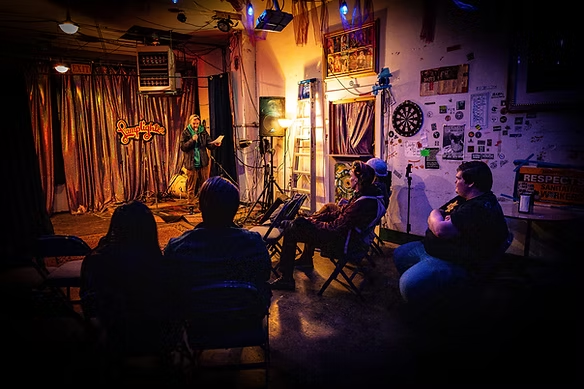
The barriers you face, from handling rejection to mastering new skills like digital marketing and video production, are not just obstacles but opportunities to differentiate yourself and enhance your comedic career.
Embrace these challenges as chances to grow both your brand and your audience.
Whether you’re a budding comic just starting out or a seasoned performer feeling stuck, remember that the art of comedy, much like any other art, evolves.
What worked in the past might not work now, and the willingness to adapt is what sets successful comedians apart.
Next Steps You Can Take Right Now
- Refine Your Skills: Spend time each week honing SOME ASPECT of craft. Whether it’s writing jokes, practicing your sets, or learning new skills like video editing and digital marketing, make sure you are constantly evolving.
- Engage With Your Audience: Utilize social media not just to promote your shows, but to create a community around your comedy. Engage with your followers, ask for their input, and make them feel part of your journey. Not replying to comments because “you only got two comments on that video” is a sign you’re insecure and doing this for the wrong reasons. Would you ignore a comedy set because you only had 7 people in the audience?
- Plan Your Content: Refer to the content planning schedule above and start filling your social media with a variety of engaging content that reflects your unique voice and style. Regular posting keeps your audience engaged and helps attract new followers.
- Seek Feedback and Mentorship: Connect with other comedians and creatives who can provide feedback and guidance. Join comedy forums, attend workshops, and don’t shy away from constructive criticism.
- Analyze and Adjust: Keep an eye on what content performs well and what doesn’t. Use this data to tweak your approach, focusing more on what resonates with your audience. Don’t write for the sake of “writing what is popular” but learn that if a TV show picked you up, you’ll be having to create jokes about things they want to cover, not you!
- Build Your Email List This Month: Set up a free Mailchimp account, create a simple signup page, put a QR code at your next show. Even 20 emails is a start. Those 20 people are your first real fans — the ones who chose to hear from you again.
- Record Your Next 5 Sets: You don’t need a camera crew. Phone on a stool. Lavalier mic. Review the footage, find the best 60 seconds, and post it with captions. Do this 5 times and you’ll have a month of content.
Remember, the path to becoming a successful comedian is a marathon, not a sprint. Comics need to be progressing every year, by writing new jokes and getting in front of more people to have an impact on society with their art.
There is a quote from Baby Reindeer on Netflix I really liked that I had to pause it and write it down:
“Some people run away by packing their bags, others run away by standing in one place too long.”
Which one do you want to be?
Frequently Asked Questions About Growing Your Comedy Career
How long does it take to make money doing stand-up comedy?
Most comedians start seeing small paid gigs ($20-$200 per show) around years 2 to 4, depending on how often they perform and how aggressively they market themselves. Making a full-time living — meaning $70,000 or more per year purely from comedy and that typically takes 5 to 10 years of consistent work. That includes live performance income, self-produced shows, online revenue, and potentially merch or digital products. The comics who get there faster are almost always the ones who treat it like a business from day one, not just an art form.
Do I need to move to LA or New York to make it?
No. That advice is 20 years old. You do not need to be in Los Angeles or New York to be discovered. What you need is to be good and to be visible online. Dry Bar Comedy is based in Utah and has launched more comedy careers in the last decade than most LA showcases. Comics like Nate Bargatze built a massive touring career from Nashville. The internet has made geography less important than ever. That said, if you want to write for TV or get into the sitcom/late-night pipeline specifically, spending time in LA or New York will help with those industry connections. But for touring, headlining clubs, and building a fan base? You can do that from anywhere. Being in New York or Los Angeles will however put you around the best of the best, and you can be sure steel sharpens steel.
Should I do clean or dirty material?
Write what’s true to you, but understand the business implications. Clean comics have access to a much wider range of bookings: corporate events, cruise ships, churches, colleges, and family-friendly clubs like Dry Bar. These tend to pay well. Comics who work blue have a harder time getting those bookings but may connect more deeply with club audiences. The sweet spot for most working comics is “TV clean” which means you could do your set on a late-night show without getting bleeped. You can always go dirtier for a late-night club set, but you can’t always clean it up for a corporate gig if all your material is rated R.
How do I deal with hecklers?
Confidence and experience. There’s no magic line that works every time. What works is having enough stage time that you’re not rattled, and enough wit to respond in the moment. Some comics engage hecklers, some shut them down with a sharp line, some ignore them entirely.
Do I need an agent or manager?
Not until you have something worth managing. An agent or manager makes money when you make money which is typically 10-15% of your bookings. If you’re not regularly getting paid $1,000+ per weekend, you’re not generating enough income for a manager to care about. Focus on building your act, your audience, and your booking relationships first. When you’re at the point where you’re turning down gigs because you have too many offers, or you need someone to negotiate bigger deals then that’s when a manager becomes valuable. Until then, manage yourself. It’s one of the best business educations you’ll get.
Is it too late to start comedy at 30, 40, or 50?
Absolutely not. Some of the best working comics started late. Rodney Dangerfield didn’t hit it big until his 50s. You have life experience that 22-year-olds don’t including marriages, careers, raising kids, losing parents, navigating the healthcare system. That’s all material. And frankly, audiences over 30 are often the ones with disposable income to buy tickets to your shows. Your age isn’t a disadvantage. Your perspective is your superpower. The only thing that matters is: are you willing to put in the stage time?
What’s the single most important thing I can do this week to grow my comedy career?
Record your next set, then watch it on the drive to the next day’s open mic. Pull the best 60-second clip, add captions, and post it. If you don’t have a show this week, book an open mic. If you already have clips but haven’t posted them, post one today. The number one thing holding most comics back isn’t talent, it’s visibility. Nobody can become your fan if they don’t know you exist.
This post was originally published on ComedyMemphis.com and has been updated and expanded for 2025. If you found this helpful, share it with a comic in your scene who needs to read it. And if you want more guides like this — on filming your sets, promoting your shows, and building your comedy career — check out our full blog.